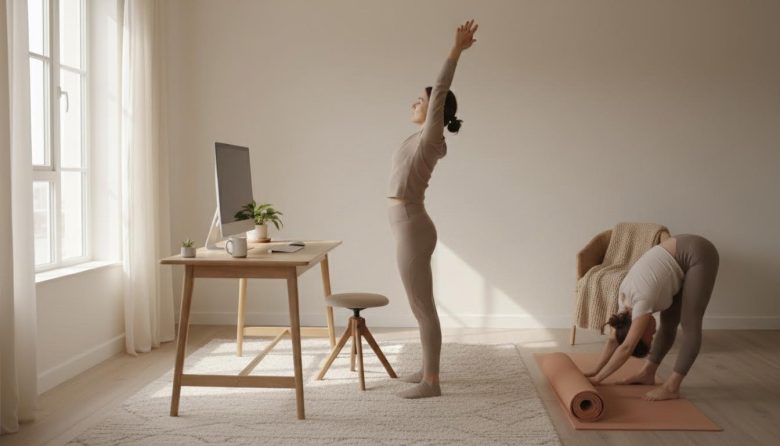
Picture this: You’re like Mike, a project manager glued to his desk for eight straight hours. Emails pile up, meetings drag on, and by afternoon, your back aches, your neck’s stiff, and focus fades. That familiar slump hits hard after a screen marathon. But here’s the good news—small movements sprinkled throughout your day can shake off that fog, boost energy, and sharpen your mind without a gym membership or extra time.
Sitting too long slows blood flow, tightens muscles, and zaps productivity. Add in quick moves, and you spark circulation, ease tension, and feel more alert. No big overhauls needed—just smart swaps for your routine. I’ve seen it work for busy folks like you. Today, discover six practical tips to weave movement into sedentary days. Start with micro-moves, then build from there for steady wins.
These fit lunch breaks, commutes, and evenings. Track how they lift your mood. Ready to ditch the desk drag?
Quick Start: Four Micro-Moves to Try Right Now
Don’t wait—test these now for an instant pick-me-up. Each takes under two minutes. Feel the shift right away.
- Stand and march in place during your next email check (2 minutes). Swing arms lightly to wake your legs.
- Do desk shoulder rolls: Forward five times, backward five (1 minute). Loosen that hunch from typing.
- Try calf raises at your desk: Rise on toes 10 times, hold two seconds each (30 seconds x 3). Builds leg strength quietly.
- Walk to the farthest bathroom or water fountain (2 minutes). Add a few deep breaths for extra calm.
Pick one for your next break. Notice less stiffness? That’s your body thanking you. Build from here with the tips below.
Tip 1: Pace Your Calls and Meetings
Remote worker Lisa felt trapped in back-to-back Zooms. She swapped sitting for pacing and reclaimed her energy. You can too—turn talk time into step time.
Prep shoes nearby for quick slips. Grab a wireless headset to roam free. Track calls where pacing fits, like one-on-ones.
- Stand at call start (10 seconds).
- Pace slowly around your space (whole call).
- Sit only for notes at end (1 minute).
Set a phone reminder: “Pace this call.” Aim for three per day. Lisa noticed clearer thoughts after a week. Small steps add up.
When building habits like this, consider elements from the Morning Kickstart Routine for Healthy Days to set a moving tone early.
Tip 2: Build Desk Stretches into Your Workflow
Hit that lunch-break slump? Like Tom, who zoned out mid-afternoon. Simple desk stretches pulled him back. Slot them between tasks for steady relief.
Try these four, one to two minutes each. No equipment needed. Do them seated or standing.
- Neck tilts: Ear to shoulder, hold 10 seconds each side (1 minute). Eases screen strain.
- Seated twists: Rotate torso gently, hand on opposite knee (1 minute). Loosens spine.
- Arm circles: Small then big, forward and back (1 minute). Opens chest.
- Seated forward fold: Reach toward feet, breathe deep (2 minutes). Stretches hamstrings.
Checklist: Set a timer every hour. Pair with coffee refills. Tom felt looser by day’s end. Keep it light—stop if it pulls.
Combine these with techniques from How to Practice Mindful Breathing in Busy Moments for deeper resets at your desk.
Tip 3: Hack Your Commute with Active Swaps
Daily drive leaves you stiff? Sarah parked one block farther and added stairs. Her commute became a mini workout. Swap passive travel for active boosts.
Options fit car, bus, or train. Add five to ten minutes total. Feel fresher arriving.
- Park at the edge of the lot (adds 5 minutes walking).
- Take stairs two flights up or down (2 minutes).
- Get off the bus one stop early (7-minute walk).
- Walk the last block from your ride-share drop-off (10 minutes).
Start small—one swap per trip. Track extra steps on your phone. Sarah cut her afternoon yawns. Adjust for weather with indoor loops.
Tip 4: Swap Sitting for Standing Wins Throughout the Day
Sedentary habits sneak in everywhere—from TV time to snack grabs. Flip them with standing swaps for better posture and flow. Use this table to pick easy matches for your day.
Spot a habit, try the swap. Each builds circulation without disruption. Aim for three daily.
| Sedentary Habit | Active Swap | Time Needed | Daily Benefit |
|---|---|---|---|
| Checking emails | Stand and reply while reading | 3 min | Better posture, quicker focus |
| Watching short videos | Stand and do leg lifts | 5 min | Stronger legs, less hip tightness |
| Waiting for coffee to brew | March in place or squat lightly | 2 min | Boosted morning energy |
| Reading news on phone | Pace your kitchen or hallway | 4 min | Clearer mind, fewer headaches |
| Brushing teeth | Do wall push-ups or calf raises | 2 min | Full-body wake-up |
| Waiting in line at lunch | Shift weight side to side, roll ankles | 3 min | Eased lower back tension |
Print this or save it. Test one row today. Notice the daily benefit stack up over time.
Tip 5: Rev Up Lunch Breaks with Quick Walks
Post-lunch fog hits hard. Office worker Raj fixed it with 10-minute loops around the block. Turn your break into movement gold.
Steps to start: Pack sneakers in your bag. Map a flat route nearby. Pair with a podcast for fun.
- Step out right at noon (1 minute prep).
- Walk brisk pace, swing arms (10 minutes).
- Deep breaths at turns (whole walk).
- Refuel back at desk (2 minutes).
Aim for 2,000 steps. Raj ditched the 2 p.m. crash. If indoors, lap the office halls. Builds hunger for afternoon tasks.
Tip 6: Ease into Evening Moves After Dinner
Family dinner winds down, couch calls. Instead, neighbor Jen led yard laps. Gentle evening moves aid digestion and sleep.
Options for after dinner: Five-minute yoga flow or porch steps. Keep it light, 10 minutes max.
- 10 slow squats while chatting (3 minutes).
- Arm swings and torso twists (4 minutes).
- Porch walk or driveway laps (5 minutes).
Recruit family for fun. Jen slept better that week. Link to Quick Tips for Better Evening Relaxation for wind-down combos.
Step-by-Step: Build Your Weekly Movement Plan
Turn tips into routine. Follow these four steps. Track progress for motivation.
- Track one full day: Note sit times (10 minutes Sunday evening).
- Pick two tips: Slot into tomorrow, like pace calls and lunch walk.
- Adjust for week: Add one more midweek (15 minutes planning).
- Review wins Friday: What felt best? Tweak (5 minutes).
Repeat weekly. Builds habit without overwhelm.
Make It Easier: Shortcuts and Substitutions
No time? Seated marches work. Bad weather? Indoor marches or stair laps.
- No shoes? Barefoot pacing on carpet.
- Joint issues? Chair yoga versions.
- Busy meetings? Subtle foot taps under desk.
- Forget reminders? Tie to phone buzzes.
- Family resists? Solo hallway loops post-dinner.
Pick shortcuts for your day. Keeps momentum on off days.
Try pacing one call today. Feel that energy shift? Jot one win tonight—your low-effort next step.
Frequently Asked Questions
What if my job keeps me glued to a chair all day?
Set 30-minute timers for one-minute stands and stretches. If meetings run back-to-back, squeeze in shoulder rolls between. Build from there for glued-desk days.
How do I remember to move without an app?
Tie moves to habits like coffee refills or email sends—stand every time. Use your computer’s screen-saver pop-up as a cue. Consistency grows naturally.
Is walking during calls distracting?
If it feels off at first, start with audio-only meetings to build ease. Practice solo calls boosts confidence. Most find clearer speaking from moving.
What about joint pain—can I still do this?
Opt for seated marches or gentle arm swings to start. If pain flares, scale back and consult your doctor for safe tweaks. Listen to your body always.
How soon will I feel more energy?
Many notice a lift by day three with consistent tries. Track mood right after a move. Adjust what works best for you.